- Safayet
- 0 Comments
- 1126 Views
Businesses today need software to automate operations, serve customers, and stay competitive. When it comes to building that software, many organizations face an important decision: should they use a low-code platform or invest in traditional custom software development?
Both approaches can deliver excellent results, but they serve different purposes. Low-code platforms offer speed and simplicity, while custom software provides flexibility and full control.
In this guide, we’ll compare both options in terms of cost, scalability, security, customization, and long-term value so you can choose the best path for your business.
For organizations planning a custom solution, it is important to start with a clear blueprint. Our guide on How to Write an Effective Software Requirements Specification (SRS) explains how to define requirements before development begins.
What Are Low-Code Platforms?
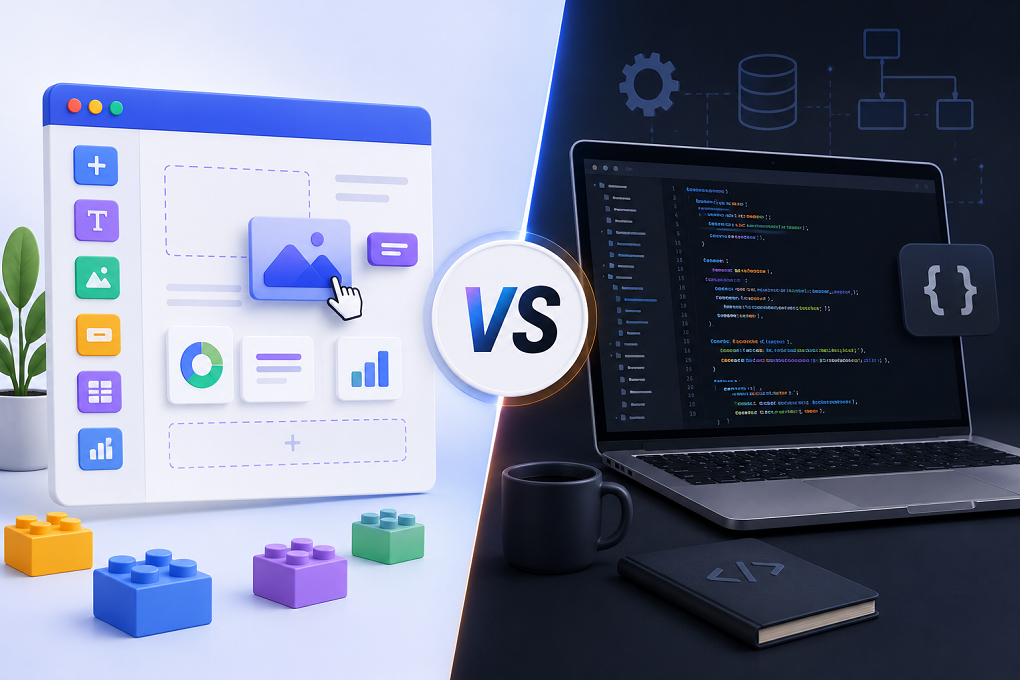
Low-code platforms are software tools that allow applications to be built using visual interfaces, drag-and-drop components, and prebuilt templates. Instead of writing thousands of lines of code, developers and even non-technical users can assemble applications quickly.
Popular low-code platforms include Microsoft Power Apps, OutSystems, Mendix, Bubble, and Appian.
These platforms are commonly used for:
- Internal dashboards
- Approval workflows
- Customer portals
- Reporting tools
- Rapid prototypes
Think of low-code as building with LEGO blocks. The pieces are already made—you simply connect them to create an application.
According to Gartner’s low-code development platform overview, low-code technologies continue to accelerate digital transformation by helping organizations deliver applications faster.
What Is Traditional Custom Software Development?
Traditional custom software development involves designing and building software from scratch using programming languages and frameworks such as Python, JavaScript, PHP, and Java.
Developers create every feature specifically for the business, resulting in a solution that matches exact requirements.
Typical technologies include:
- Frontend: React, Next.js, Angular
- Backend: Django, Node.js, Laravel, Spring Boot
- Mobile: Flutter, Swift, Kotlin
- Databases: PostgreSQL, MySQL, MongoDB
This approach is commonly used for:
- SaaS platforms
- ERP systems
- Healthcare software
- FinTech solutions
- E-commerce marketplaces
Custom development is like constructing a house from the ground up based on your own blueprint.
Development Speed
Low-Code Wins for Rapid Delivery
Low-code platforms significantly reduce development time. A simple workflow or dashboard can often be launched in days or weeks.
This makes low-code ideal for:
- MVPs
- Internal automation
- Short-term projects
- Proof of concepts
Custom Development Takes Longer
Traditional development requires planning, design, coding, testing, and deployment. Depending on complexity, projects may take several months.
However, the extra time results in a solution tailored precisely to your business.
Customization and Flexibility
Low-Code Has Boundaries
Low-code platforms are limited by the features and components provided by the vendor. If your requirements fall outside those boundaries, customization may become difficult or expensive.
Custom Development Offers Unlimited Possibilities
With custom development, every function, workflow, and user interaction can be designed exactly as needed.
If your business process is unique, custom development provides the freedom to build without compromise.
Scalability and Performance
Low-Code Is Suitable for Moderate Growth
Low-code applications can handle many business scenarios, but performance may become constrained with high traffic, large datasets, or advanced business logic.
Custom Software Scales Without Platform Restrictions
Custom applications can be optimized for millions of users, large databases, and complex processing requirements.
This is why fast-growing SaaS companies and enterprises typically choose custom development.
Security and Compliance
Security is especially important in industries like healthcare, finance, and education.
Low-Code Security Depends on the Vendor
The platform provider manages much of the infrastructure and security. While many vendors offer robust protection, you have less direct control.
Custom Software Gives Full Security Control
Custom development allows your team to implement:
- Advanced authentication
- Data encryption
- Audit logs
- Compliance standards such as HIPAA and GDPR
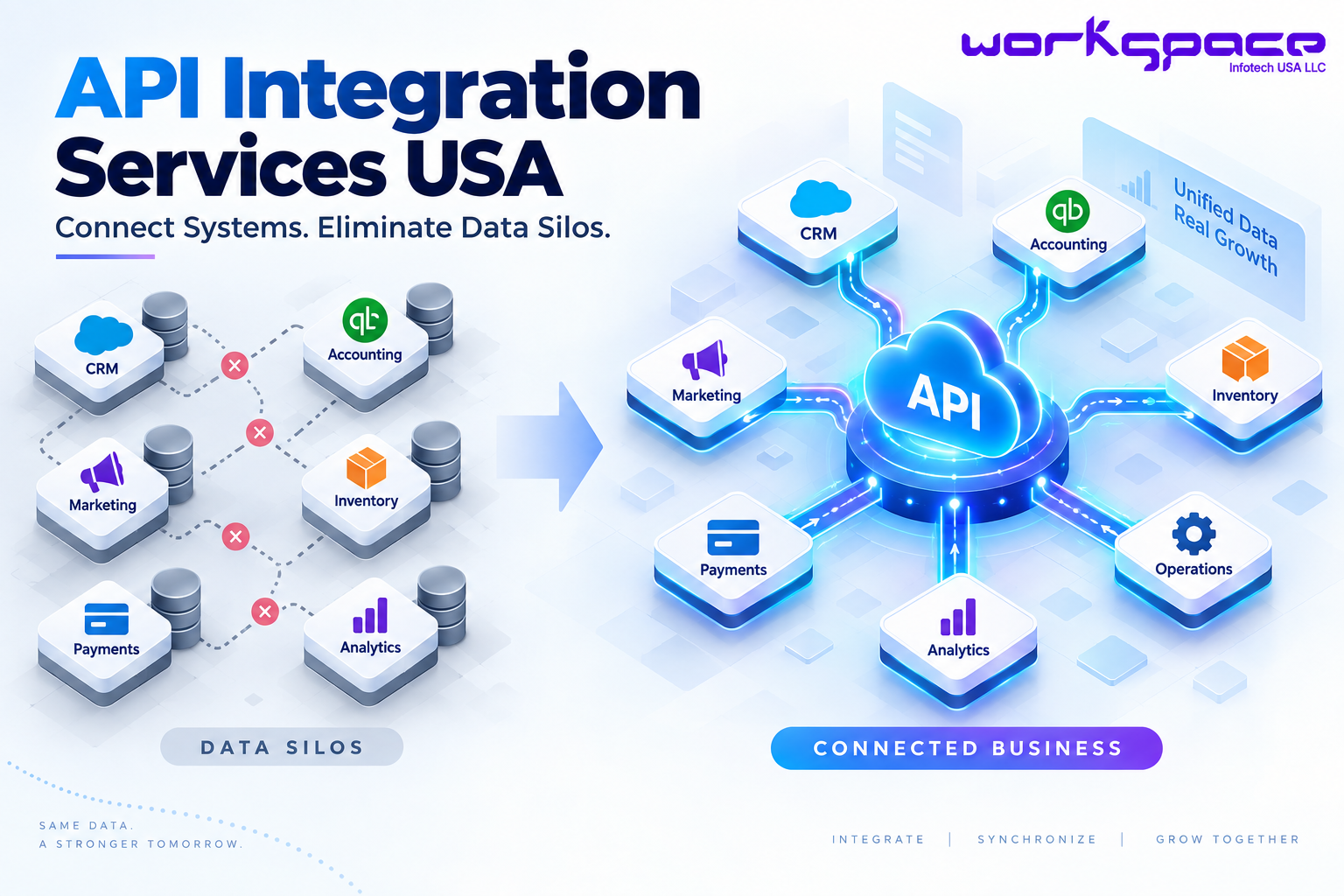
This level of control is essential for regulated industries. Businesses that require complex system connectivity can also benefit from professional API Integration Services to connect software with payment gateways, CRMs, ERPs, and third-party platforms.
Ownership and Vendor Lock-In
Low-Code Creates Platform Dependency
Applications are often tightly tied to the platform. Moving away later may require rebuilding the system from scratch.
Custom Software Means Full Ownership
Your company owns the source code, database design, and infrastructure. You are free to host, modify, or extend the application whenever needed.
Vendor lock-in is one of the biggest strategic considerations when choosing low-code.
Cost Comparison
Low-Code Costs
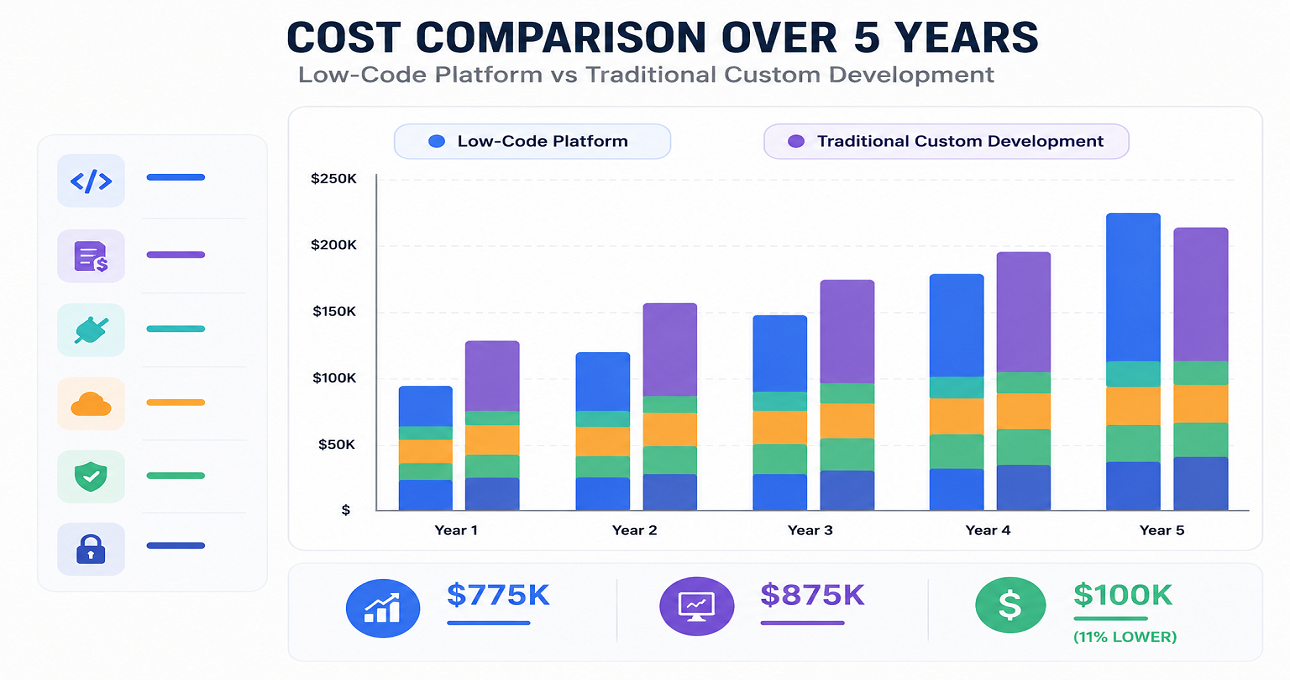
Low-code often appears less expensive initially because development is faster. However, recurring costs can add up:
- Monthly platform subscriptions
- Per-user licensing fees
- Premium connector charges
- Storage and API usage fees
Custom Development Costs
Custom software usually requires a larger upfront investment covering:
- Requirement analysis
- UI/UX design
- Development
- QA testing
- Deployment
Long term, there are no mandatory platform licensing fees, making custom software more cost-effective for strategic applications.
Best Use Cases for Low-Code
Low-code is an excellent option when:
- You need a solution quickly.
- The application is relatively simple.
- Non-technical users need to make updates.
- Budget is limited.
- The software is for internal use.
Examples include leave approval systems, CRM dashboards, and reporting tools.
Best Use Cases for Traditional Custom Development
Custom development is the better choice when:
- Your business logic is complex.
- Performance and scalability are critical.
- Security requirements are strict.
- You want complete ownership.
- The software is a core business asset.
Examples include healthcare management systems, enterprise ERP solutions, and subscription-based SaaS platforms.
Real-World Example
Imagine a company wants to automate employee expense approvals.
A low-code solution using Microsoft Power Apps could be built within a few weeks and integrated with Microsoft tools such as Excel and Outlook.
Now imagine a startup building an AI-driven SaaS platform with custom billing, analytics, and multi-tenant architecture. A low-code platform would likely struggle with the complexity, making traditional development the better choice.
Hybrid Approach: The Best of Both Worlds
Many organizations combine both approaches.
For example:
- Internal approval tools built with low-code
- Customer-facing product built with custom software
- Low-code dashboards connected to custom APIs
This hybrid strategy delivers speed where appropriate and flexibility where it matters most.
How to Choose the Right Approach
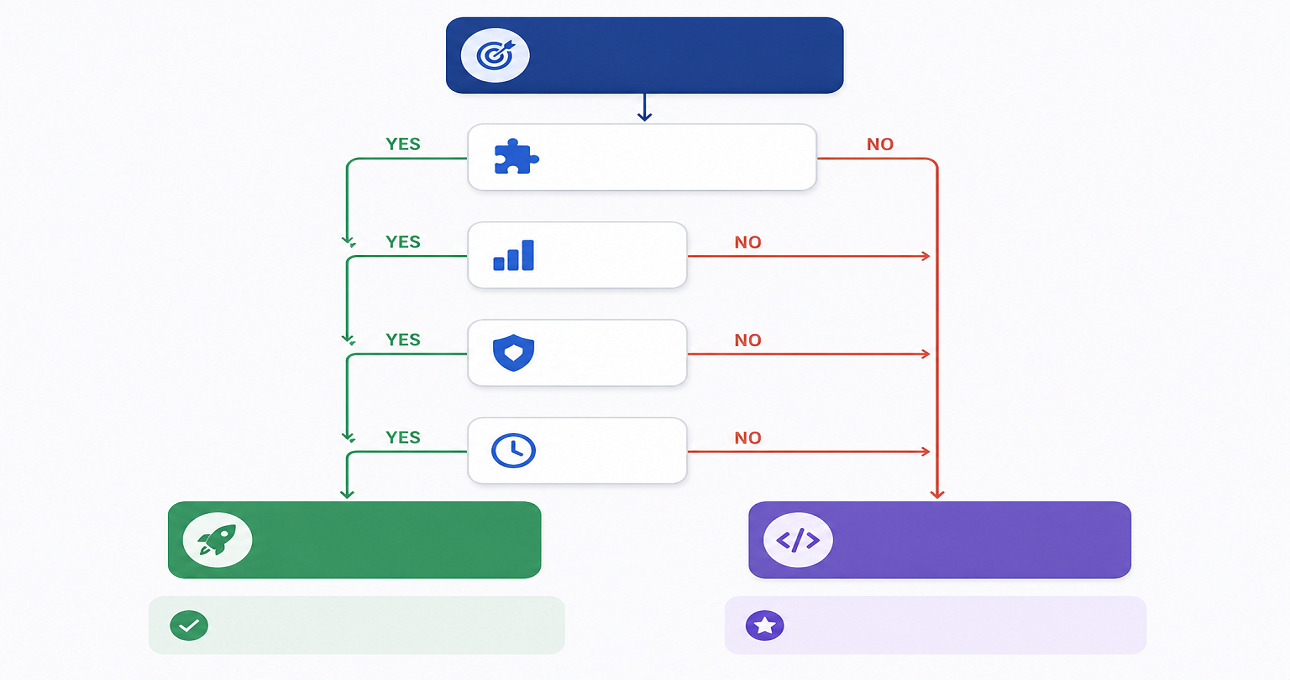
Ask these questions before deciding:
- How complex are the business requirements?
- Will the software become a strategic asset?
- Are there compliance or security concerns?
- How quickly do you need the solution?
- What are the long-term costs?
- Do you want full ownership?
If the project is simple and needs to launch quickly, low-code may be the right fit.
If the software will drive your business growth and competitive advantage, custom development is usually the smarter investment.
Future Trends
Low-code adoption continues to grow as businesses seek faster digital transformation. At the same time, custom development remains essential for high-performance and mission-critical systems.
The future is increasingly hybrid, combining low-code efficiency with custom engineering expertise.
Conclusion
Low-code platforms and traditional custom software development both have their place.
Low-code offers speed, convenience, and lower upfront costs. It is ideal for internal tools and straightforward applications.
Traditional custom development provides complete control, scalability, security, and ownership. It is the preferred option for businesses building long-term products and competitive technology solutions.
The best choice depends on your goals, technical requirements, budget, and growth plans.
If your software will become a core part of your business strategy, investing in custom development often delivers the greatest long-term value.