- Sanzida Afrin
- 0 Comments
- 256 Views
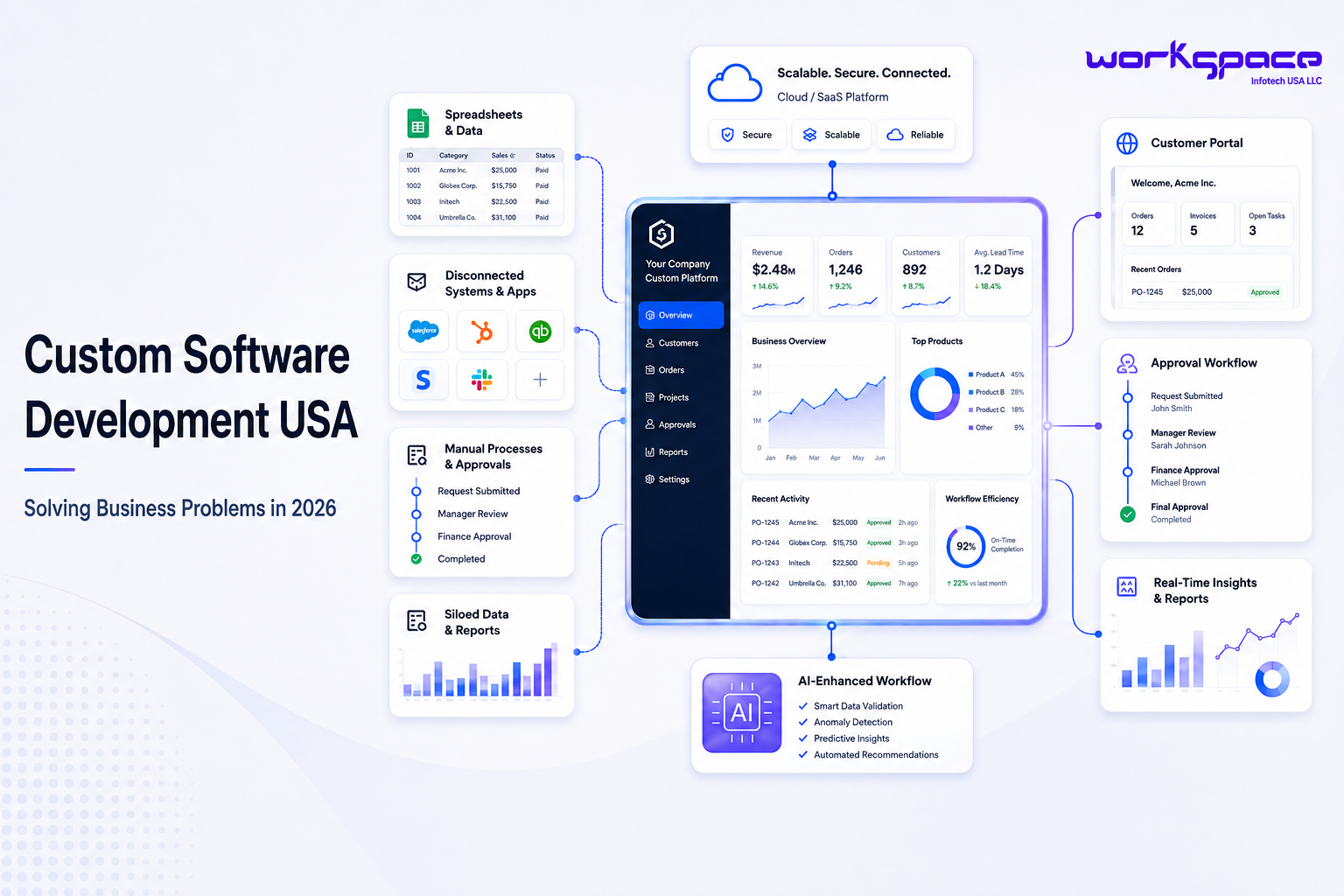
Custom software development USA projects are becoming less about simply building an application and more about solving specific business problems.
A company might need to replace spreadsheets, connect several disconnected systems, automate an approval process, build a customer portal, launch a SaaS product, or introduce AI into an existing workflow.
Off-the-shelf software can handle many standard requirements. But when a business has unique processes, integration needs, security requirements, or growth plans, custom software can provide more control over how the technology works.
For businesses considering a software project in 2026, the most important decision is not simply which programming language to use.
It is understanding what should be built, why it should be built, and how the software will support the business over time.
What Is Custom Software Development?
Custom software development is the process of designing and building software around the specific requirements of an organization rather than adapting the organization completely around a ready-made product.
A custom solution could be:
- a customer portal;
- internal operations software;
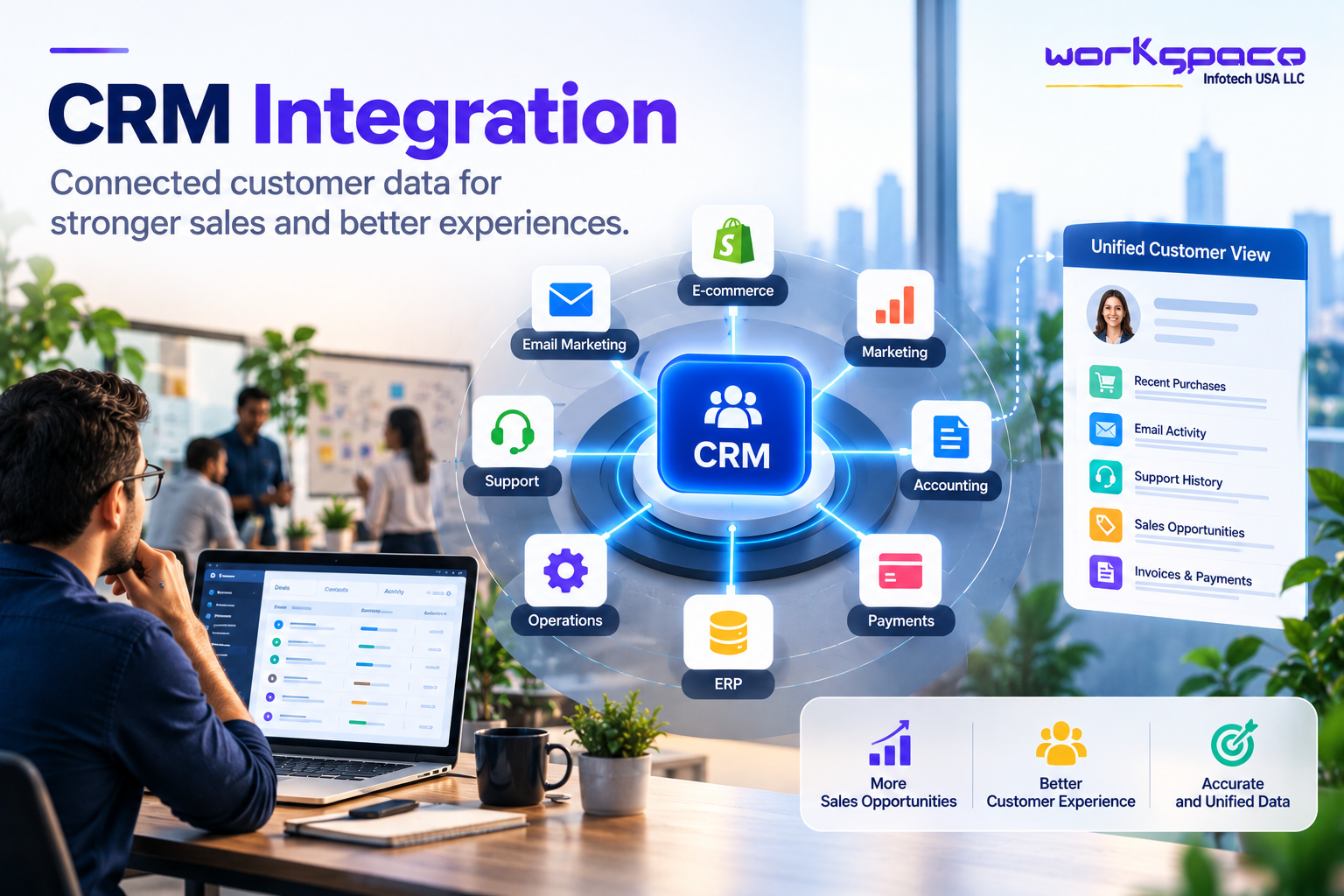
- CRM or ERP integration;
- inventory management platform;
- SaaS application;
- mobile or web application;
- reporting dashboard;
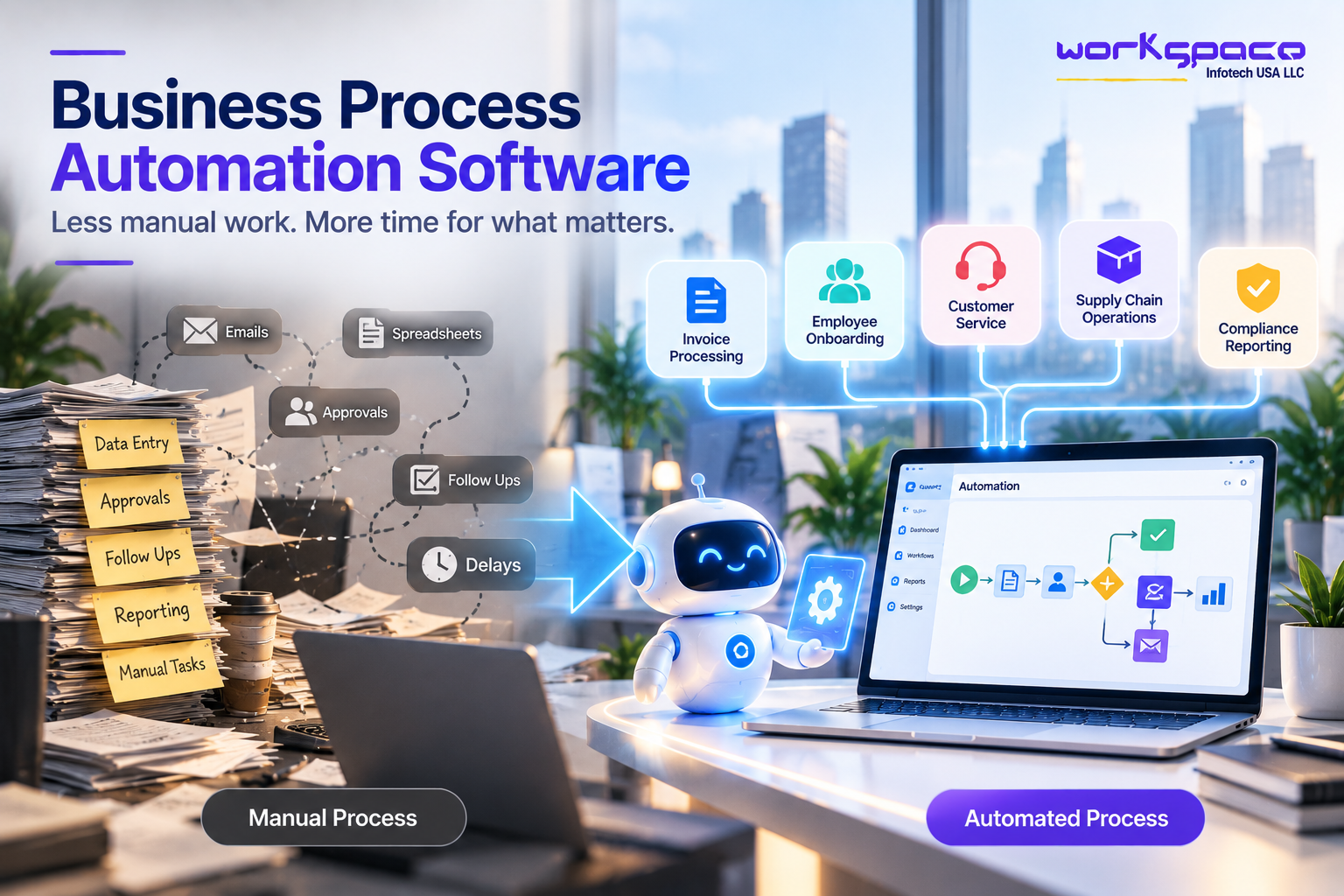
- workflow automation system;
- AI-enabled business tool.
The development process usually includes requirements analysis, UI/UX design, development, testing, deployment, and ongoing maintenance.
Modern software development also increasingly connects development and operations through DevOps practices and automated delivery processes. IBM describes software development as covering the creation, design, deployment, and support of software across the software development lifecycle.
Why Businesses Choose Custom Software in 2026
Businesses usually consider custom development when existing tools no longer match the way they operate.
Existing Software Creates Too Much Manual Work
Employees may be copying information between spreadsheets, email, CRM platforms, accounting tools, and other systems.
Custom software can create one workflow that connects these processes and reduces repeated manual steps.
Multiple Systems Need to Work Together
A growing company may use separate tools for sales, finance, customer service, inventory, reporting, and operations.
Custom integrations can help information move between those systems through APIs instead of employees entering the same data repeatedly.
The Business Has Unique Processes
Generic software is designed for a broad market.
If your competitive advantage depends on a specific workflow, approval process, customer experience, or operating model, forcing that process into generic software can create limitations.
Existing Software Is Difficult to Scale
A system that works for 20 employees may not work well for 200.
Custom software can be designed around expected transaction volume, integrations, permissions, reporting requirements, and future features.
Custom Software vs Off-the-Shelf Software
| Off-the-Shelf Software | Custom Software |
|---|---|
| Faster initial setup | Built around specific requirements |
| Lower initial investment | Higher initial development commitment |
| Standard features | Business-specific features |
| Vendor controls roadmap | Business has greater roadmap control |
| Limited customization | Flexible integrations and workflows |
| Good for common processes | Strong fit for unique processes |
If a ready-made platform already solves 90% of your problem at a reasonable cost, custom development may not be necessary.
But if employees are constantly creating workarounds, connecting disconnected systems manually, or paying for several tools that still do not support the process, custom software becomes worth evaluating.
What Custom Software Development USA Projects Should Include
1. Clear Business Requirements
Do not begin with:
“We need an app.”
Begin with:
“What business problem are we trying to solve?”
Define the users, existing problems, required workflows, integrations, security requirements, and expected outcomes.
This helps prevent unnecessary features and scope confusion later.
2. User-Friendly UI/UX
A technically strong system can still fail internally if employees find it difficult to use.
The interface should match how users actually complete tasks.
Simple navigation, clear forms, useful dashboards, responsive layouts, and consistent workflows can reduce training and adoption problems.
3. API and System Integration
Modern businesses rarely operate from one system.
A custom application may need to connect with:
CRM → ERP → Payment Platform → Email → Analytics → Customer Portal
Integration planning should happen early rather than becoming an afterthought after development.
4. Scalability
Businesses should consider future users, data volume, locations, new features, integrations, and potential product expansion.
That does not mean overbuilding the first version.
It means avoiding technical decisions that create unnecessary limitations later.
Security Should Be Part of Development From the Beginning
Security should not be something a team adds immediately before launch.
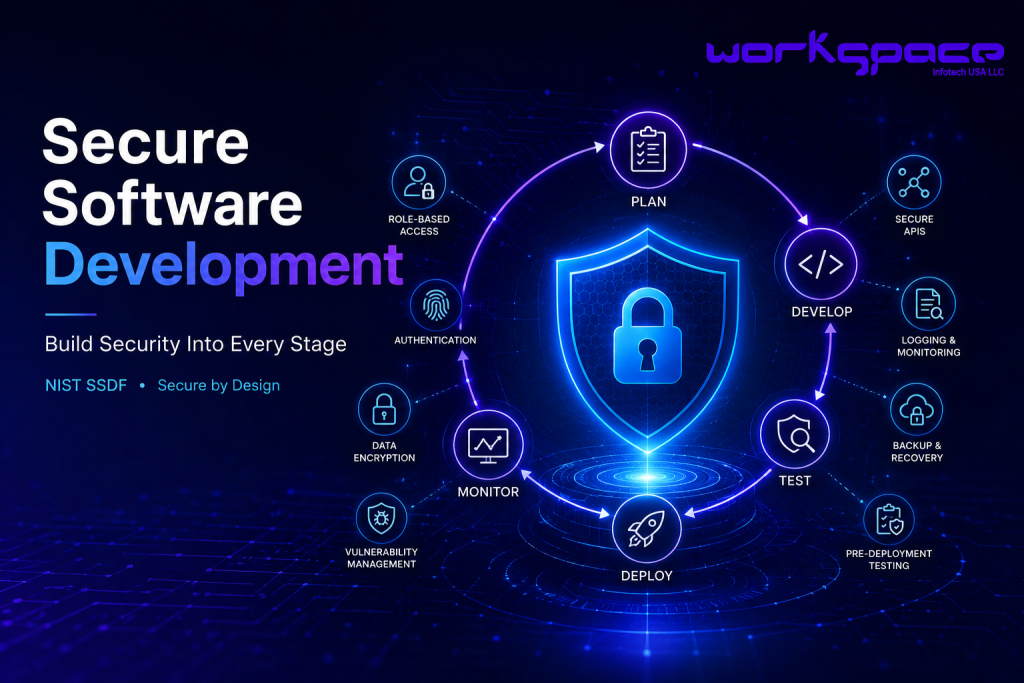
NIST‘s Secure Software Development Framework recommends integrating secure software development practices into the software development lifecycle rather than treating security as a separate final activity. NIST released an updated SSDF 1.2 draft in late 2025 with expanded practices for secure and reliable software development.
CISA‘s Secure by Design guidance similarly encourages software manufacturers to make security a core product consideration rather than shifting most of the security burden to customers.
For a business application, security planning may include:
- role-based access;
- authentication;
- data encryption;
- secure APIs;
- logging and monitoring;
- backup and recovery;
- vulnerability management;
- testing before deployment.
The appropriate controls depend on the data, industry, users, and level of risk.
AI and Custom Software Development in 2026
AI can add value to custom software, but adding “AI” to every feature does not automatically make a product better.
The strongest AI implementations begin with a clear use case.
For example:
AI-Powered Customer Support
An internal or customer-facing assistant can retrieve approved information, summarize requests, and route cases.
Intelligent Document Processing
AI can help extract and organize information from invoices, forms, reports, contracts, and other business documents.
AI Dashboards
Instead of only showing historical numbers, dashboards can help users summarize data, identify patterns, and investigate changes.
Workflow Automation
AI can support multi-step workflows involving classification, recommendations, document review, or exception handling.
Internal Knowledge Search
Employees can access information from approved internal documents without manually searching through multiple folders or systems.
AI also introduces additional risk considerations. NIST’s AI Risk Management Framework is designed to help organizations manage risks when designing, developing, deploying, or using AI systems.
For businesses, this means AI features should include appropriate data permissions, monitoring, testing, and human oversight.
How Much Does Custom Software Development Cost?
There is no reliable one-price answer.
Cost depends on factors such as:
- project scope;
- number of features;
- design complexity;
- integrations;
- web, mobile, or both;
- security requirements;
- AI functionality;
- infrastructure;
- testing requirements;
- ongoing support.
A small internal system and a multi-tenant enterprise SaaS platform are completely different projects.
Businesses should therefore ask for a scope-based estimate rather than choosing a development partner purely from an hourly rate.
How to Choose a Custom Software Development Company in the USA
Do not evaluate a development partner only by how many technologies appear on its website.
Ask practical questions:
Do they understand the business problem?
Can they explain their development process clearly?
How will they handle QA and testing?
Who owns the source code and project assets?
How will communication and project tracking work?
Can they integrate with your existing systems?
How do they approach security?
What happens after launch?
A strong development partner should be comfortable discussing both technology and business outcomes.
How Workspace Infotech USA Can Help
Workspace Infotech USA works with businesses that need software designed around real operational requirements. Its current service positioning includes custom software development, product design, QA and testing, strategic consulting, web development, and related technology capabilities.
Depending on the project, Workspace Infotech USA can support businesses with:
- custom business software;
- SaaS platforms;
- AI dashboards;
- CRM and ERP integrations;
- internal portals;
- workflow automation;
- web applications;
- API integrations;
- QA and testing;
- scalable digital solutions;
- website and software audits.
The goal should not be building more software than a business needs.
It should be building the right software around the right process.
Final Thoughts
Custom software development is a significant investment, but the technology itself is only part of the decision.
Before starting a project, understand the business problem, users, integrations, security requirements, expected growth, and measurable outcome.
For some businesses, an existing SaaS platform will remain the best option.
For others, custom software development USA projects can provide the flexibility to automate unique workflows, integrate disconnected systems, improve customer experiences, and build technology around how the business actually operates.
The strongest projects in 2026 will not begin with:
“What software should we build?”
They will begin with:
“What business problem are we trying to solve?”
Frequently Asked Questions
What is custom software development?
Custom software development involves designing and building software specifically around the requirements, workflows, users, and objectives of a particular organization.
Is custom software better than SaaS?
Not always. SaaS is often more practical when a standard product already meets the requirement. Custom software becomes more valuable when the business has unique workflows, integrations, scalability needs, or product requirements.
How long does custom software development take?
The timeline depends on scope and complexity. A focused MVP can take considerably less time than a large enterprise platform with multiple integrations, user roles, and advanced features.
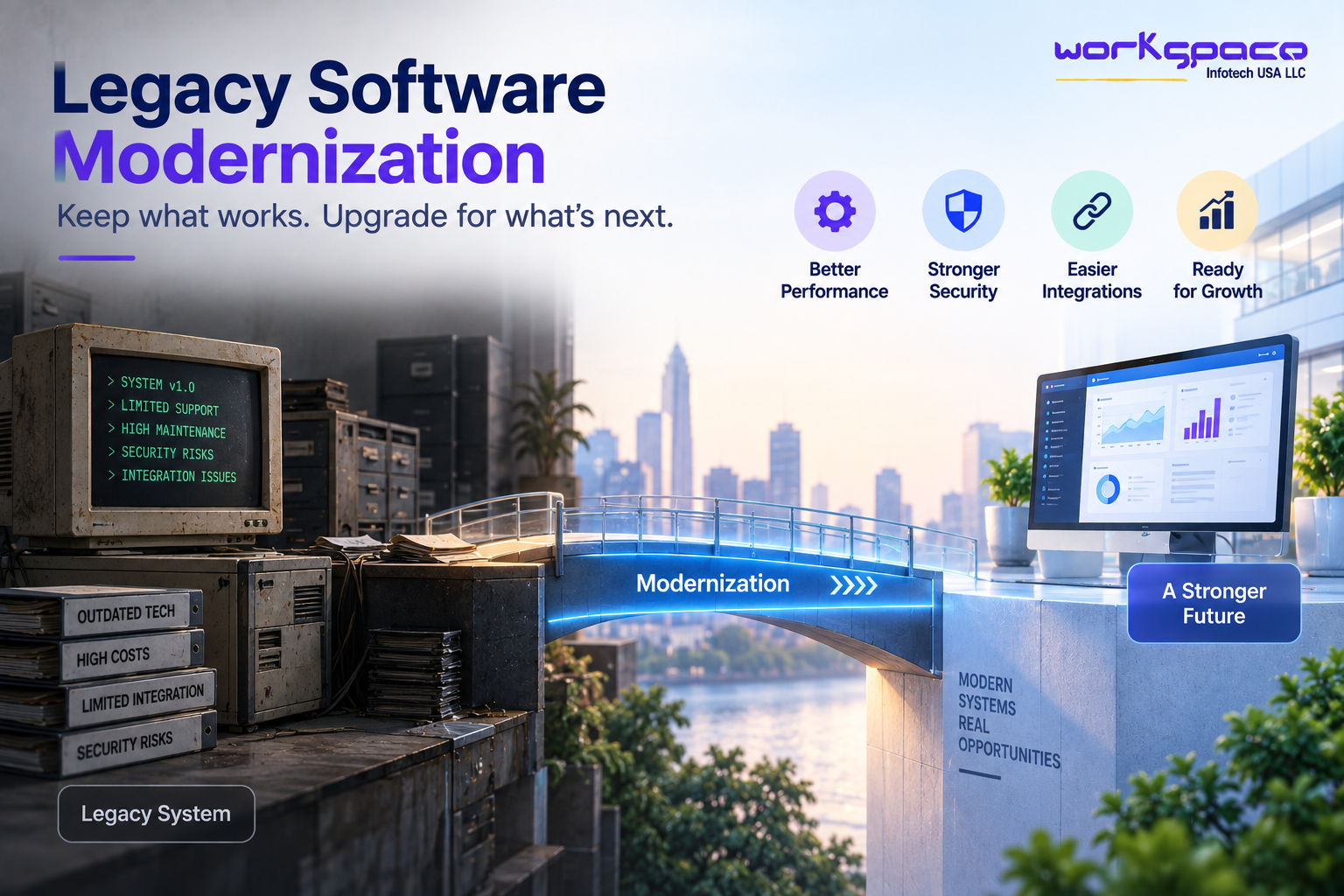
Can existing business software be modernized instead of replaced?
Yes. Businesses can sometimes modernize an existing application, redesign part of the interface, migrate infrastructure, improve integrations, or rebuild specific components instead of replacing the entire system.
Can AI be added to existing custom software?
Yes, depending on the architecture and business use case. AI features can support search, document processing, workflow automation, reporting, customer support, and other functions.
What should businesses prepare before contacting a development company?
Prepare a short explanation of the problem, target users, existing systems, required features, integrations, timeline expectations, and the business outcome you want the software to achieve.