- Sanzida Afrin
- custom Software, Software Development, USA Software
- 0 Comments
- 302 Views
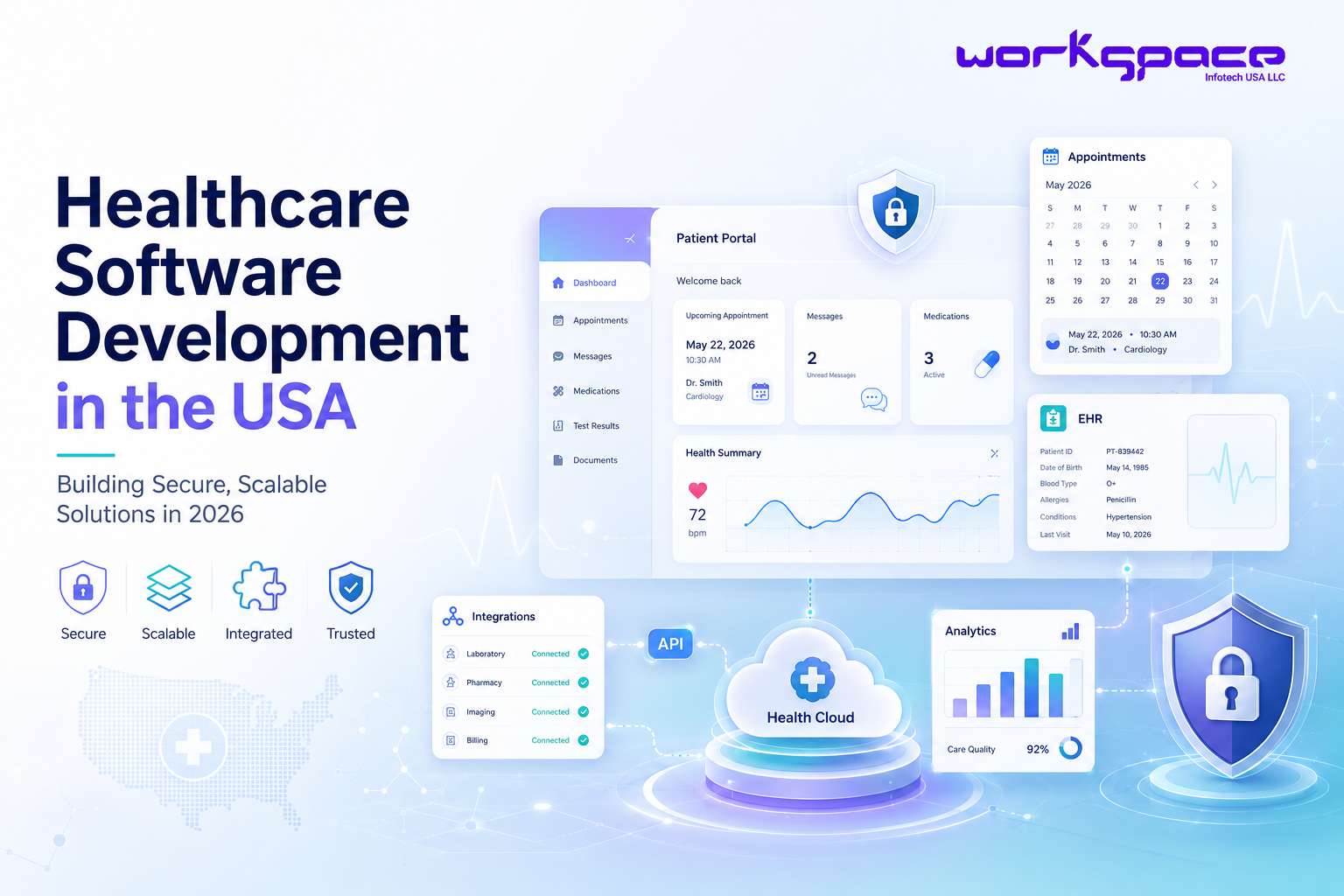
Healthcare software development USA is becoming increasingly important as healthcare organizations move toward secure digital platforms, connected systems, and AI-powered solutions in 2026.
From patient portals and appointment systems to AI-powered platforms and healthcare SaaS products, technology is changing how providers manage operations and how patients interact with healthcare services.
However, healthcare software development is different from building a normal business application.
A healthcare platform does not only need to look modern.
It needs to protect sensitive information, support complex workflows, integrate with existing systems, and provide a reliable experience for both healthcare professionals and patients.
For businesses planning a healthcare technology solution in 2026, the biggest challenge is not simply creating software.
It is creating software that people can trust.
Why Healthcare Software Development USA Projects Require a Different Approach
A traditional business application may focus mainly on efficiency and user experience.
Healthcare software has additional responsibilities.
A healthcare platform may handle:
- patient records;
- medical information;
- appointment history;
- billing details;
- provider communication;
- treatment information;
- insurance-related data.
This means the software architecture needs to consider privacy, security, user permissions, and compliance from the beginning.
A poorly designed healthcare system can create operational problems, security risks, and trust issues.
That is why successful healthcare software projects start with understanding the workflow first.
Before writing code, businesses need to understand:
- Who will use the system?
- What information will it manage?
- Which users need access?
- What processes should be automated?
- How will the platform scale in the future?
Companies investing in healthcare software development USA solutions need to consider more than functionality. The platform must support healthcare workflows, protect sensitive information, integrate with existing systems, and provide a reliable experience for both providers and patients.
Compliance and Security: The Foundation of Healthcare Software
In healthcare, security cannot be added at the final stage.
It needs to be part of the development process.
In the United States, healthcare organizations handling protected health information (PHI) need to consider requirements related to HIPAA regulations. The U.S. Department of Health & Human Services (HHS) provides guidance around protecting health information and implementing appropriate safeguards.
A secure healthcare application usually requires:
- strong authentication;
- role-based access control;
- encryption;
- secure APIs;
- audit logging;
- backup and recovery planning;
- monitoring and testing.
For example, a receptionist should not have the same access level as a physician.
A patient should only see their own information.
An administrator may need broader operational access.
This is where proper software architecture becomes critical.
Custom Healthcare Software vs Ready-Made Solutions
Many healthcare businesses face the same question:
Should we buy existing software or build a custom solution?
Both options can work depending on the business requirements.
| Ready-Made Healthcare Software | Custom Healthcare Software |
|---|---|
| Faster implementation | Designed around specific healthcare workflows |
| Lower initial investment | Higher initial development commitment |
| Limited customization options | Complete flexibility in features and integrations |
| Vendor controls updates and roadmap | Business controls product direction and improvements |
| May require businesses to adjust processes | Software adapts to existing business processes |
| Suitable for common healthcare requirements | Better for unique healthcare models and specialized needs |
For smaller organizations with standard requirements, an existing platform may be enough.
However, healthcare companies with unique workflows, multiple integrations, specialized services, or plans to build a healthcare product may benefit more from custom software development.
The right decision depends on the business model, not just the technology.
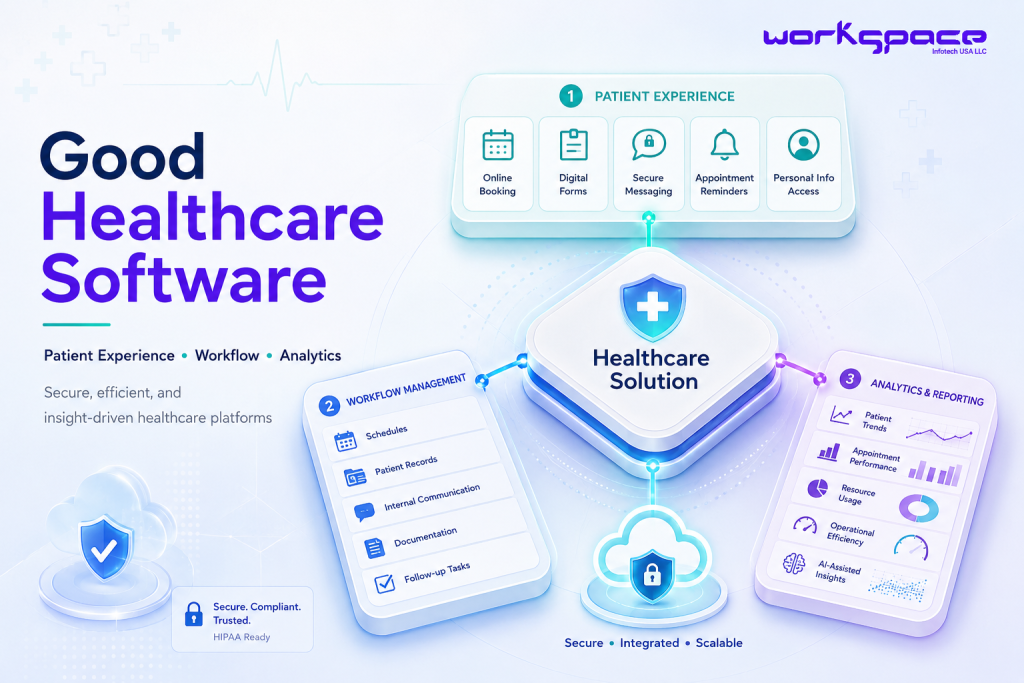
What Makes a Good Healthcare Software Solution?
A successful healthcare platform is not defined by the number of features it contains.
It is defined by how effectively it solves real problems.
Some important capabilities include:
Patient Experience
Patients increasingly expect digital convenience.
Modern healthcare applications may include:
- online appointment booking;
- digital forms;
- secure communication;
- appointment reminders;
- access to personal information.
A smoother digital experience can improve patient satisfaction and reduce administrative workload.
Healthcare Workflow Management
Healthcare professionals need systems that support their daily operations.
A well-designed platform can help manage:
- schedules;
- patient information;
- internal communication;
- documentation;
- follow-up activities.
The software should make healthcare work easier, not add more complexity.
Analytics and Reporting
Healthcare organizations generate valuable operational data.
Analytics dashboards can help teams understand:
- patient trends;
- appointment performance;
- resource usage;
- operational efficiency.
When combined with AI, these systems can provide deeper insights while keeping human decision-making involved.
The Role of AI in Healthcare Software Development
Artificial intelligence is becoming one of the biggest technology shifts in healthcare.
However, AI should not be added simply because it is trending.
The best implementations solve specific problems.
Examples include:
AI-Assisted Administrative Work
AI can help organize documents, summarize information, and reduce repetitive administrative tasks.
Intelligent Healthcare Search
Healthcare organizations often store large amounts of information.
AI-powered search can help authorized users find relevant information faster.
Patient Support Assistants
AI assistants can help answer common questions, guide patients through processes, and improve communication.
Healthcare Analytics
AI can analyze patterns in approved data and help organizations understand operational trends.
However, healthcare AI requires careful implementation.
Sensitive information needs proper access control, security planning, and human oversight.
NIST’s AI Risk Management Framework highlights the importance of managing risks throughout AI system design, development, and deployment.
Cloud and Scalability in Healthcare Applications
Healthcare businesses need software that can grow.
A solution designed for a small clinic may struggle when the organization expands to multiple locations or thousands of users.
Modern healthcare platforms often consider:
- cloud infrastructure;
- scalable databases;
- secure integrations;
- performance monitoring;
- reliable backups.
Cloud-based healthcare SaaS platforms can provide flexibility, but they must be designed carefully with security and compliance requirements in mind.
How to Choose the Right Healthcare Software Development Partner
Healthcare software requires more than technical coding ability.
A good development partner should understand:
- healthcare workflows;
- security requirements;
- compliance considerations;
- user experience;
- system integrations;
- long-term scalability.
Before choosing a partner, businesses should ask:
Do they understand healthcare challenges?
How do they approach security?
How do they handle testing?
Can they integrate with existing systems?
What happens after launch?
The right partner should help transform healthcare challenges into practical digital solutions.
How Workspace Infotech USA Supports Healthcare Software Development USA Projects
Workspace Infotech USA helps organizations with healthcare software development USA, custom software solutions, AI-powered applications, secure integrations, and scalable healthcare platforms.
For healthcare organizations, solutions may include:
- patient portals;
- healthcare SaaS platforms;
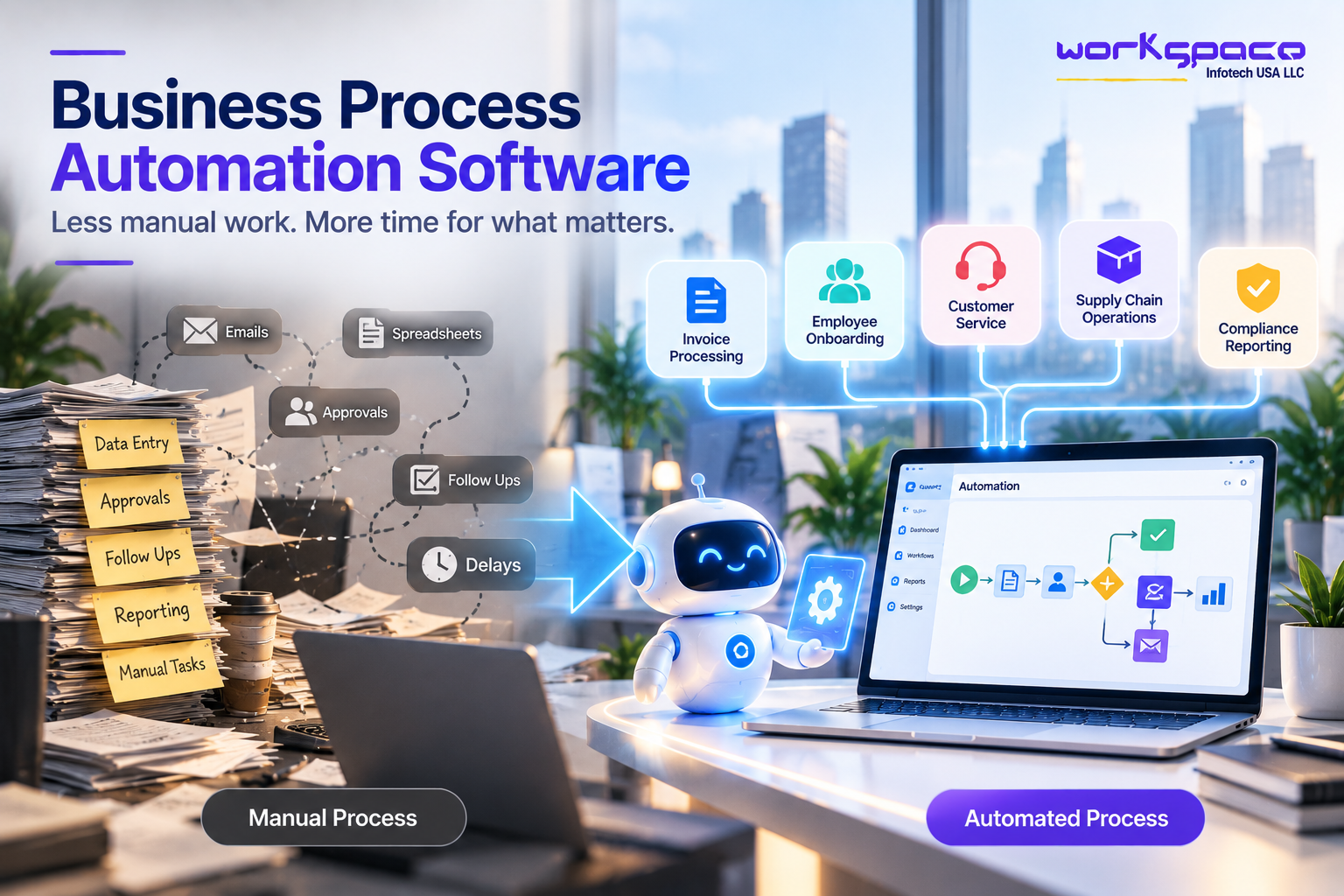
- workflow automation;
- custom management systems;
- AI-enabled applications;
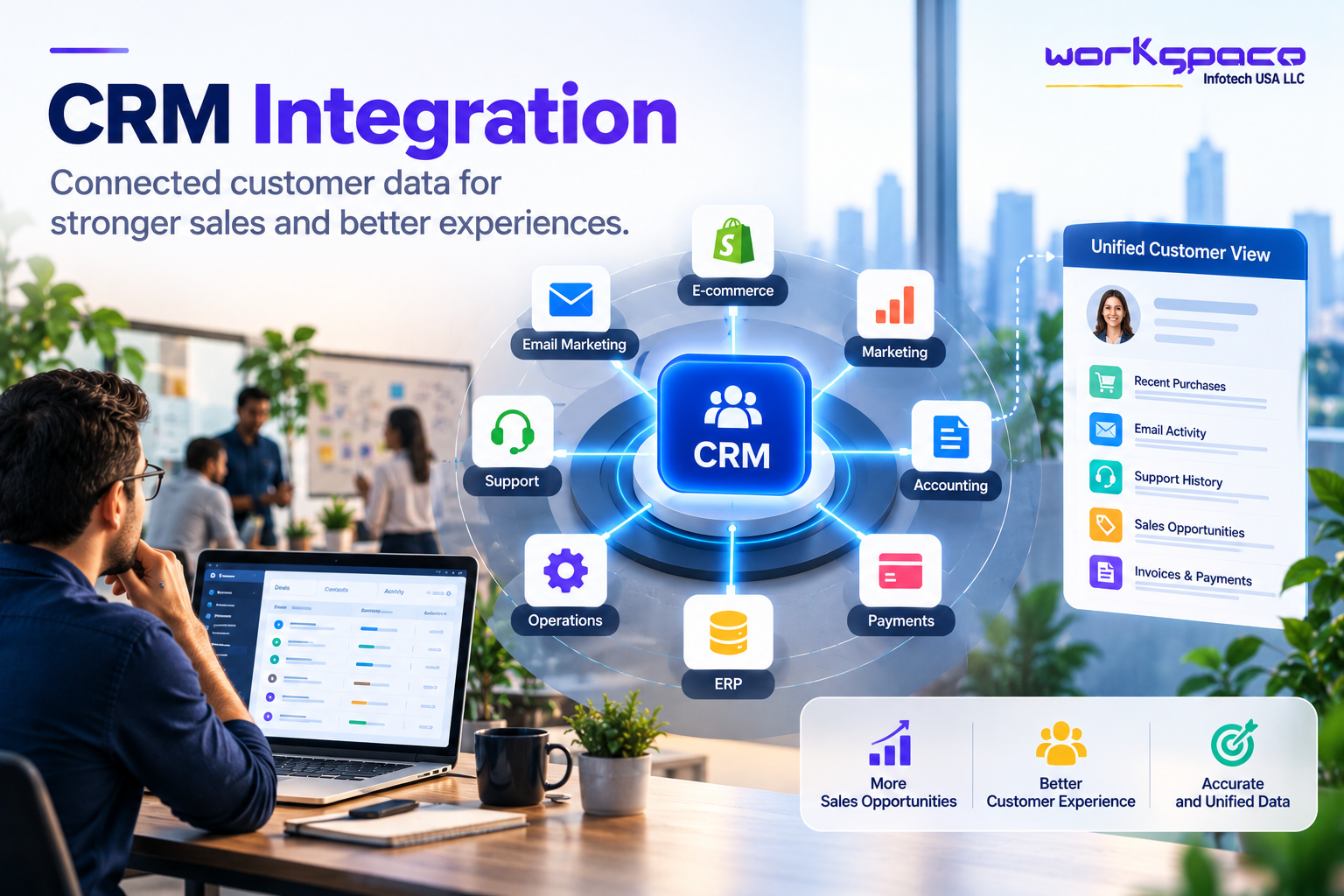
- CRM and ERP integrations;
- cloud-based solutions;
- QA and testing.
The focus should always be creating technology that improves operations while maintaining security and reliability.
A successful healthcare application is not just software.
It is a digital foundation that supports better experiences for organizations, providers, and patients.
Final Thoughts
Healthcare software development in the USA is moving toward a future where security, usability, scalability, and intelligence work together.
Businesses no longer need technology only to store information.
They need platforms that improve workflows, connect systems, support healthcare professionals, and create better experiences for patients.
The strongest healthcare solutions in 2026 will not be the ones with the most features.
They will be the ones designed around real healthcare problems.
Frequently Asked Questions
What is healthcare software development?
Healthcare software development involves creating digital solutions for healthcare organizations, providers, and patients to improve operations, communication, and service delivery.
Is healthcare software required to be HIPAA compliant?
Healthcare applications handling protected health information may need to follow HIPAA requirements depending on their use case and organization type.
Should healthcare businesses build custom software or buy existing solutions?
It depends on requirements. Existing software works well for standard needs, while custom solutions are better for unique workflows, integrations, and specialized healthcare services.
How can AI improve healthcare software?
AI can support healthcare through automation, intelligent search, analytics, document processing, and communication assistance while maintaining proper security controls.
How much does healthcare software development cost?
Costs depend on features, complexity, integrations, security requirements, design needs, and long-term support requirements.