- Sanzida Afrin
- 0 Comments
- 264 Views
Every growing business eventually faces an important technology decision:
Should we buy existing software, or should we build a custom solution?
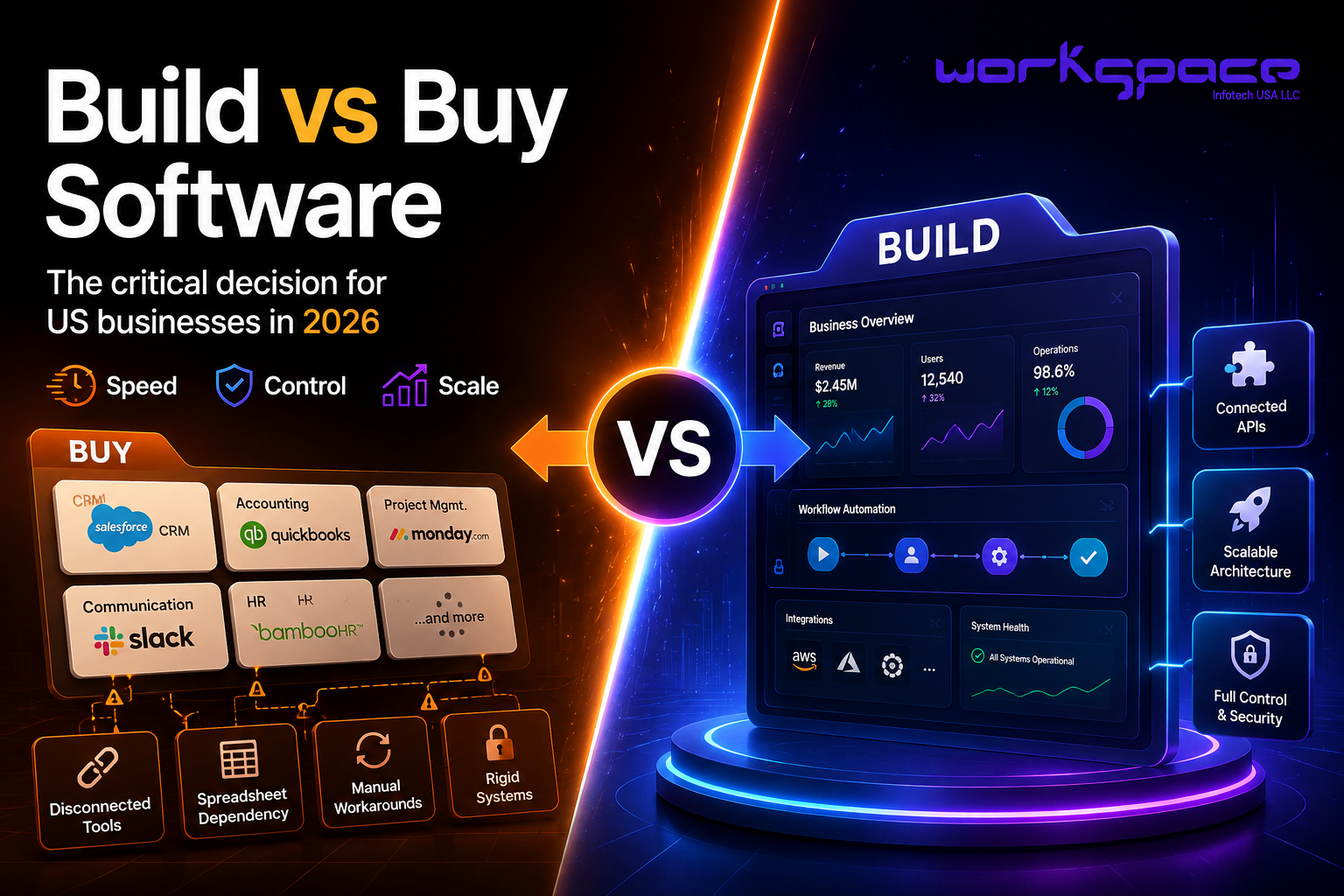
The build vs buy software decision is not only about development costs. It affects how efficiently a company operates, how easily it can scale, and how much control it has over its technology.
Many businesses start with ready-made software because it is faster and easier. A CRM, accounting platform, project management tool, or communication system can solve immediate problems.
However, as the company grows, limitations often appear.
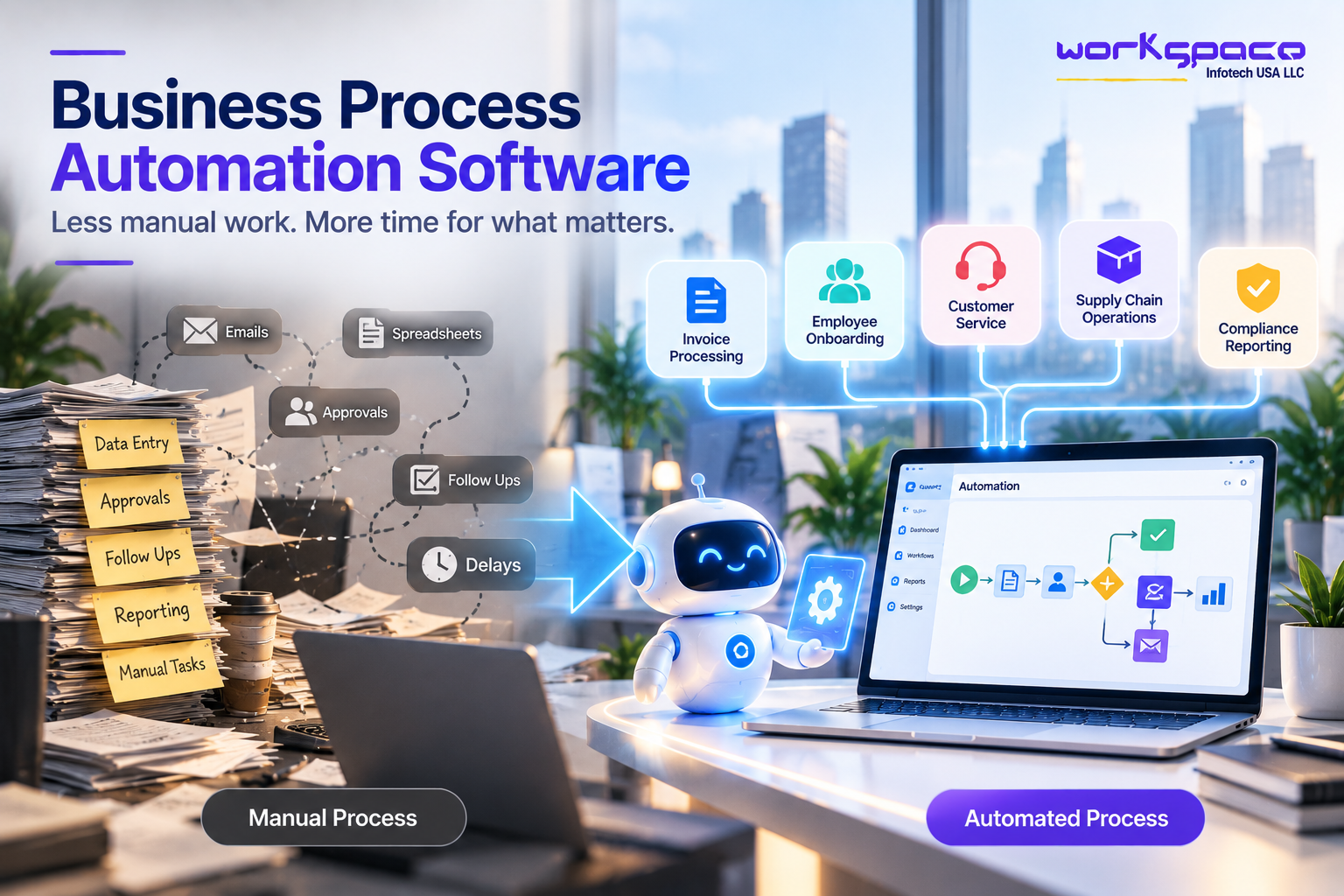
Teams start creating manual workarounds. Employees move information between disconnected systems. Important business processes become dependent on spreadsheets and repetitive tasks.
At that point, businesses need to evaluate whether existing software is still supporting growth or becoming a limitation.
The right decision depends on the company’s goals, processes, budget, and long-term strategy.
Understanding the Build vs Buy Software Decision
Before choosing an approach, businesses need to understand what each option actually means.
Buying software usually means selecting an existing product created for a broad market. These solutions are often available as SaaS platforms with subscription-based pricing.
Examples include CRM systems, accounting tools, customer support platforms, and project management applications.
Building software means creating a solution specifically designed around a company’s requirements. The system is developed according to business workflows, user needs, integrations, security requirements, and future growth plans.
Neither approach is automatically better.
The question is:
Which option creates more value for the business over time?
Buying Software: When Ready-Made Solutions Make Sense
For many businesses, buying software is the right choice.
If a company needs a standard solution with common features, an existing platform can provide faster implementation without the time and investment required for custom development.
A business may choose ready-made software when:
- the workflow is common across industries;
- customization requirements are limited;
- speed is more important than flexibility;
- existing integrations are available;
- the company does not want to manage software development.
For example, a small company looking for basic accounting software does not usually need a custom accounting system.
A proven platform can solve the problem efficiently.
However, problems usually appear when businesses try to force unique processes into software designed for general use.
The Limitations of Ready-Made Software
Ready-made software is designed to serve many companies, not one specific organization.
This creates some natural limitations.
A business may need a special approval process, unique reporting dashboard, customized customer portal, or connection between multiple internal systems.
The software may not support these requirements without expensive modifications.
Over time, companies may experience:
- too many disconnected tools;
- manual data entry;
- limited customization;
- dependency on vendor decisions;
- difficulty adapting the system as the business grows.
The issue is not that SaaS software is bad.
The issue is that business requirements often become more complex than the software was designed to handle.
Custom Software Development: When Building Becomes the Better Option
Custom software gives businesses control over how their technology works.
Instead of changing business processes to match software limitations, the software is designed around the business.
This approach is especially valuable for companies with:
- unique operational workflows;
- complex integrations;
- specialized customer experiences;
- industry-specific requirements;
- plans to create a software product.
For example, a healthcare company may need a patient management platform with specific workflows. A logistics company may need a tracking system connected with internal operations. A SaaS startup may need a completely unique product experience.
In these situations, custom software can become a competitive advantage.
Custom Software vs Ready-Made Software: A Comparison
| Ready-Made Software | Custom Software |
|---|---|
| Faster implementation | Designed around business requirements |
| Lower initial investment | Higher upfront development cost |
| Limited customization | Complete flexibility and control |
| Vendor controls updates and roadmap | Business controls future improvements |
| Works well for standard processes | Better for unique workflows |
| May require businesses to adapt | Software adapts to business operations |
The better option depends on whether the business needs a tool or a technology foundation.
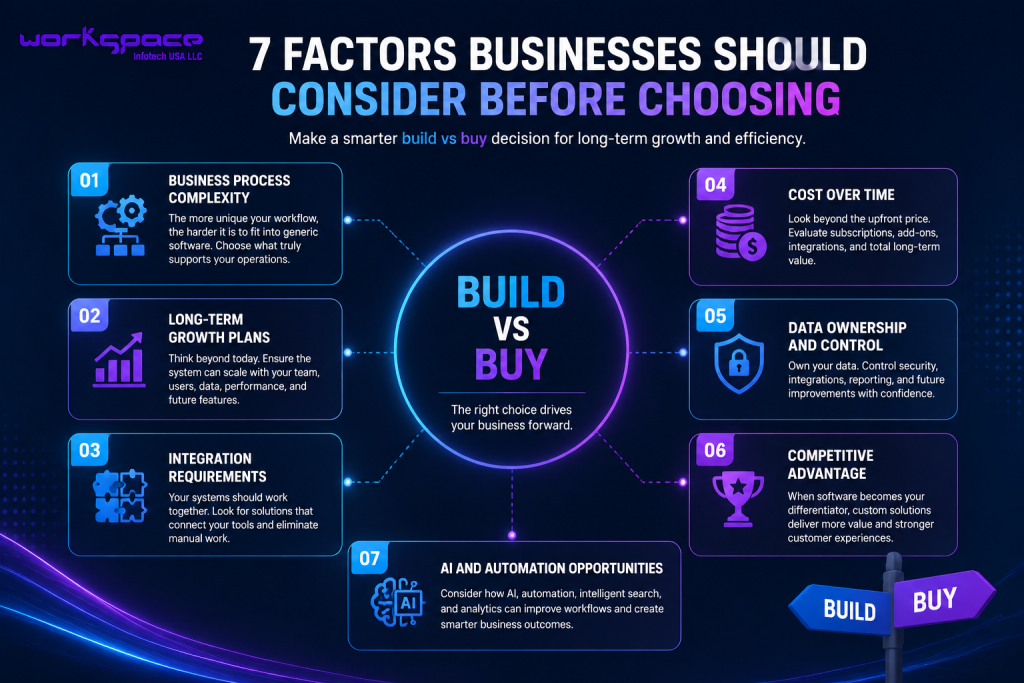
Seven Factors Businesses Should Consider Before Choosing
1. Business Process Complexity
The more unique a company’s workflow is, the more difficult it becomes to fit into generic software.
A business with simple processes may benefit from SaaS.
A company with specialized operations may need custom development.
The question is not:
“Can software do this?”
Almost every software can do something.
The question is:
“Can software support the way our business actually operates?”
2. Long-Term Growth Plans
Many businesses focus only on today’s requirements.
However, software decisions should consider future growth.
A system that works for 20 employees may struggle when the company reaches 200 employees.
Businesses planning expansion should consider scalability, integrations, performance, and future features before making a decision.
3. Integration Requirements
Modern businesses rarely operate with one system.
A company may use:
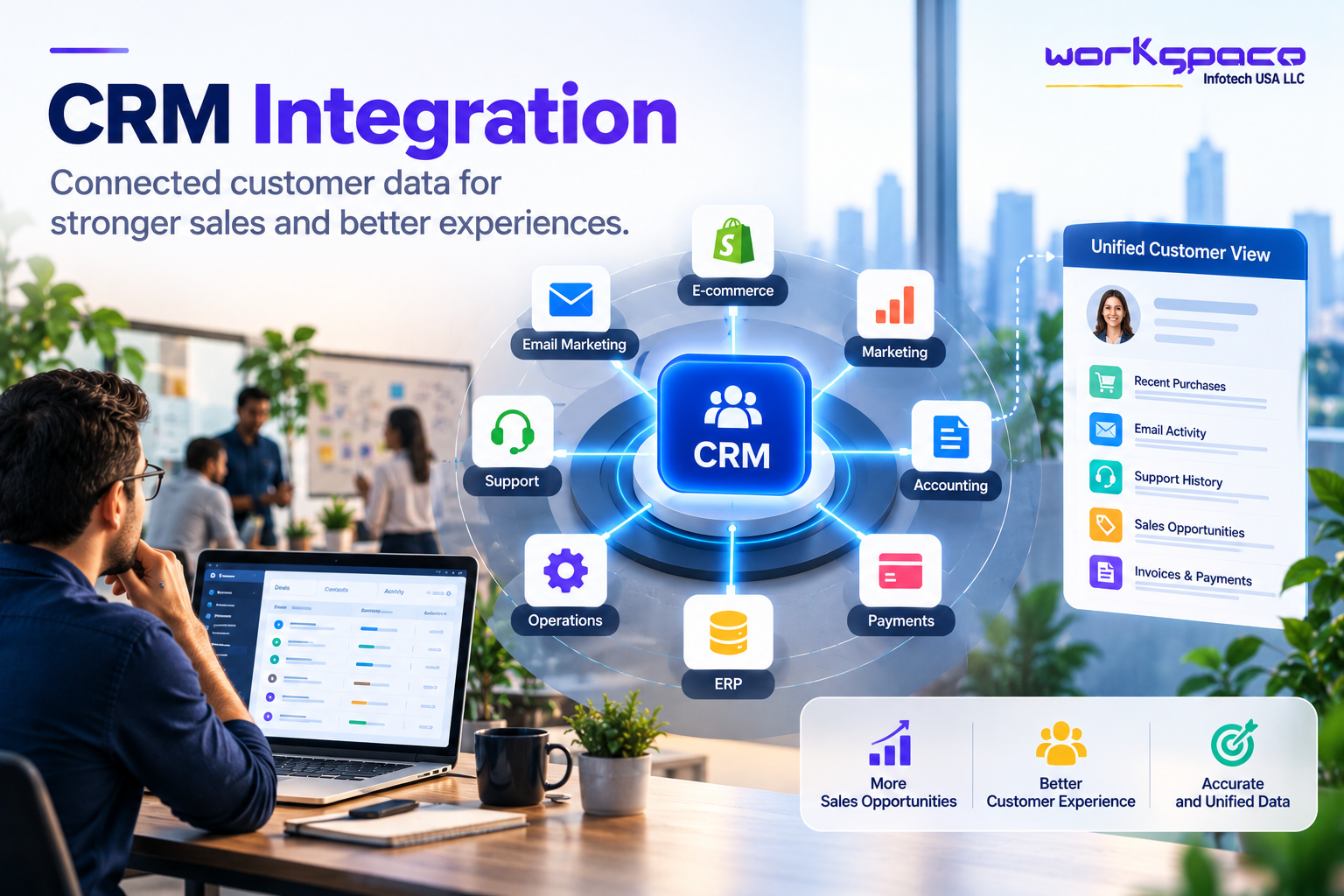
- CRM software;
- accounting platforms;
- payment systems;
- analytics tools;
- inventory systems;
- customer portals.
If these systems do not communicate properly, employees spend time moving information manually.
Custom software can help connect different systems into a unified workflow.
4. Cost Over Time
The cheapest option initially is not always the most cost-effective.
Buying software may involve:
- monthly subscriptions;
- additional user fees;
- premium features;
- integration costs;
- customization limitations.
Custom software requires more initial investment but may provide better efficiency, control, and scalability over time.
Businesses should evaluate total value, not only initial price.
5. Data Ownership and Control
For many organizations, data is one of their most valuable assets.
Custom solutions allow businesses to have more control over:
- data structure;
- security policies;
- integrations;
- reporting systems;
- future improvements.
This becomes increasingly important for industries handling sensitive information.
6. Competitive Advantage
Sometimes software is simply an internal tool.
Other times, software becomes part of the company’s competitive advantage.
Examples include:
- SaaS products;
- marketplaces;
- customer platforms;
- automated business systems.
When technology directly impacts customer experience or business differentiation, custom development often provides more strategic value.
7. AI and Automation Opportunities
Modern software decisions should also consider AI.
Businesses are increasingly adding:
- AI-powered dashboards;
- workflow automation;
- intelligent search;
- customer assistants;
- predictive analytics.
Custom software can provide more flexibility when integrating AI into specific business processes.
However, AI should support a clear business goal rather than being added simply because it is trending.
Build vs Buy Software: What Should Businesses Choose?
There is no universal answer.
A company with standard requirements may benefit from buying software and focusing resources elsewhere.
A company with unique workflows, complex integrations, or ambitious growth plans may benefit from building a custom solution.
A practical approach is often a combination.
Many successful businesses use:
Existing SaaS Platforms + Custom Integrations + Automation + Custom Software Components
The goal is not choosing between “build” or “buy” blindly.
The goal is creating the technology environment that helps the business perform better.
How Workspace Infotech USA Can Help
Workspace Infotech USA helps businesses evaluate, design, and develop technology solutions based on real operational needs.
Whether a company needs:
- custom software development;
- SaaS platforms;
- CRM and ERP integrations;
- AI-powered solutions;
- workflow automation;
- business dashboards;
- web and mobile applications;
the right starting point is understanding the business problem first.
A successful software project is not about building more technology.
It is about building the right technology.
Final Thoughts
The build vs buy software decision is one of the most important choices businesses make during digital transformation.
Buying software can provide speed and simplicity.
Building software can provide flexibility, control, and long-term strategic value.
The best decision comes from understanding where the business is today and where it wants to go tomorrow.
The companies that make smarter software decisions will not only improve operations.
They will create stronger foundations for future growth.
Frequently Asked Questions
Is custom software better than SaaS?
Not always. SaaS works well for common business needs, while custom software is better for unique workflows and specialized requirements.
When should a business build custom software?
Businesses should consider custom software when existing tools create limitations, require too much manual work, or cannot support unique processes.
Is building software more expensive than buying?
Custom software usually requires higher initial investment, but it can provide greater flexibility and long-term value.
Can businesses combine SaaS and custom software?
Yes. Many companies use existing platforms combined with custom integrations and automation solutions.
How long does custom software development take?
The timeline depends on project complexity, features, integrations, design requirements, and testing needs.